

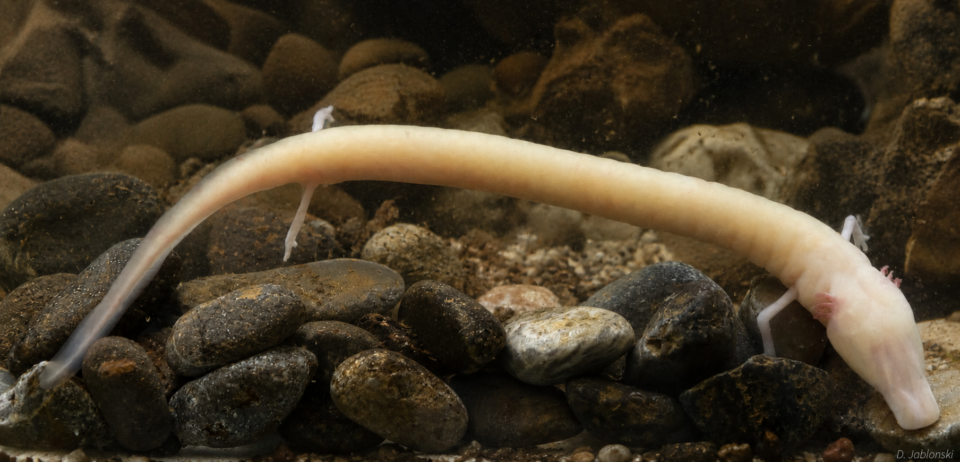
A New Species of Olm Described in Bosnia and Herzegovina, Among the Authors Our Colleague Adnan Zimić
A new scientific paper has been published in the journal Amphibia-Reptilia, presenting significant findings on the evolution, genetics, morphology, and distribution of the olm (Proteus) in the Balkans. Among the authors of the paper is Adnan Zimić, a herpetology curator at the National Museum of Bosnia and Herzegovina.
Of particular significance for Bosnia and Herzegovina is the fact that the research describes a new species of olm – Proteus bosniensis sp. nov., or the Bosnian olm. The scientific name bosniensis refers to Bosnia and emphasizes the species’ association with the territory of Bosnia and Herzegovina and its subterranean freshwater ecosystems.
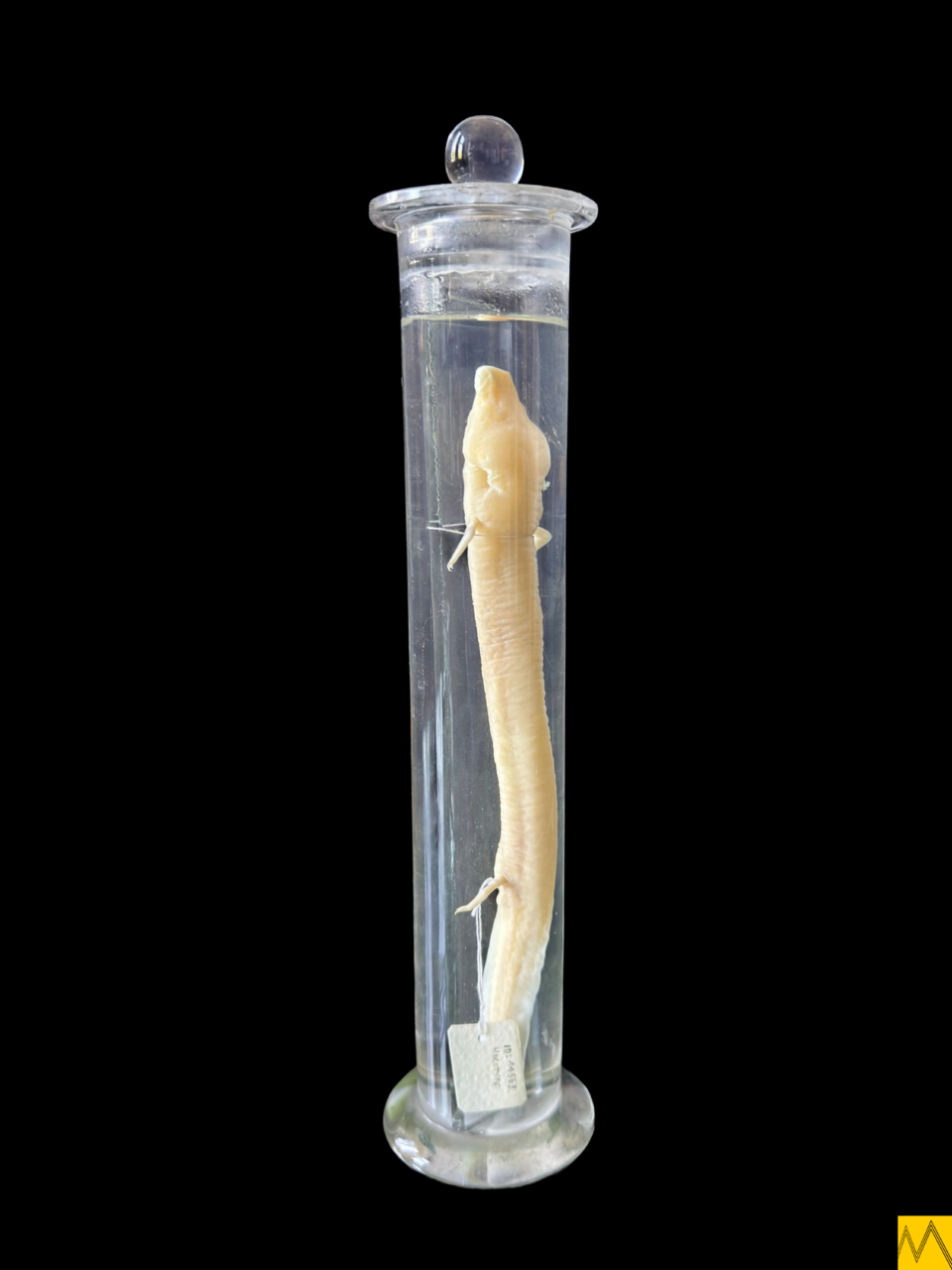
The type material of the new species originates from Bobijaško Oko near Lušci Palanka, while the holotype is deposited in the collection of the National Museum of Bosnia and Herzegovina (NMBH 11568), together with paratypes from Bobijaško Oko and Suvaja. This is also the first holotype of an amphibian species deposited in the collection of the National Museum of Bosnia and Herzegovina. The paper also presents a historical specimen from the Museum’s collections, further demonstrating the importance of the Museum’s herpetological collection for contemporary scientific research.
Proteus bosniensis sp. nov. is restricted to the upper reaches of the Una and Sana river basins, within the Danube drainage basin, in northwestern Bosnia and Herzegovina, primarily in the wider Grmeč area. The species inhabits a complex karst landscape characterized by a series of high karst poljes at approximately 600 m above sea level, from which groundwater flows through subterranean systems toward lower karst poljes at around 300 m above sea level. The water emerges at the surface through major karst springs, including Klokot, Krušnica, Sanica, and Dabar.
The cave systems within the species’ range are characterized by the presence of extensive black bacterial biofilms covering the limestone surfaces. These subterranean ecosystems support exceptionally rich communities of organisms, making the area one of the significant biodiversity hotspots of the northwestern Dinaric karst.
The research also indicates that the actual distribution of Proteus bosniensis is likely greater than currently known. The species’ estimated range covers approximately 700 km², while the area in which suitable populations and habitats have been recorded is estimated at around 30 km². Due to its restricted distribution, the authors preliminarily recommend that the species be assessed as Endangered under criterion B of the IUCN Red List.
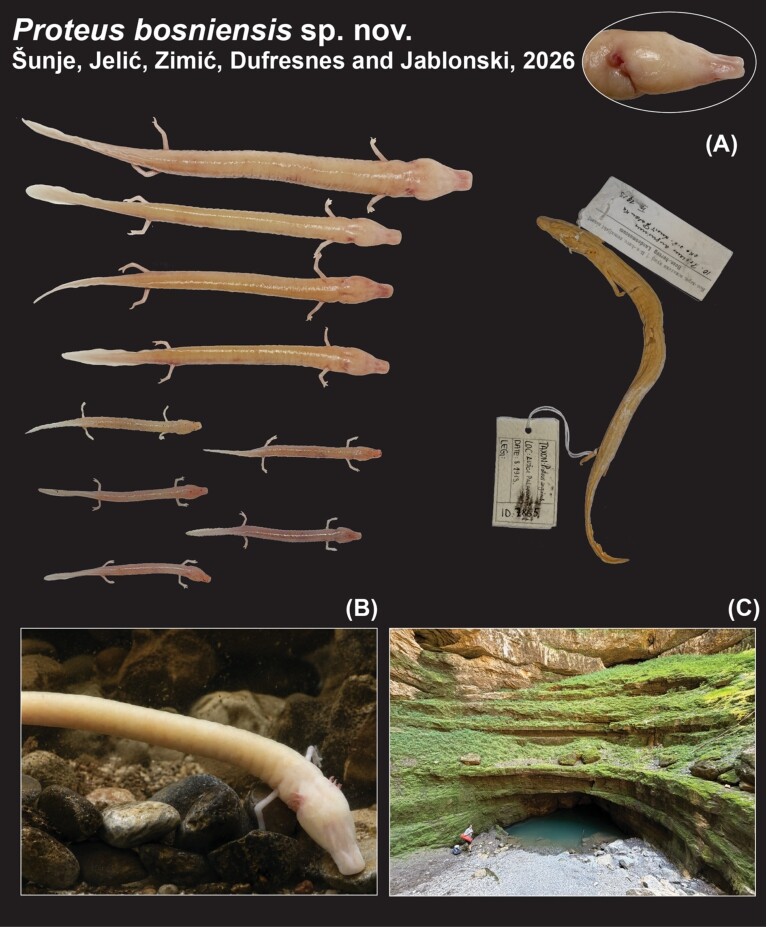
The study examined different lineages of the genus Proteus and combined genetic, morphological, and ecological data to better understand the relationships among olm populations across the Balkans. The results indicate considerably greater diversity within the genus than previously recognized.
The publication of these findings represents an important contribution to our understanding of the biodiversity of Bosnia and Herzegovina, particularly its subterranean world, which still harbors numerous scientifically understudied natural values. At the same time, the participation of experts from the National Museum of Bosnia and Herzegovina in international scientific research highlights the importance of the professional work carried out by our curators, as well as the value of the Museum’s natural history collections, which provide an important foundation for contemporary research.
Congratulations to our colleague Adnan Zimić and all the authors on this significant scientific contribution to our knowledge of the olm and the biodiversity of Bosnia and Herzegovina.
More information is available at this link.